

We are navigating through a world metastasizing with the up-and-coming population known as Gen Z. Zoomers. This is the generation that follows Millennials, the oldest of whom graduated college or entered the workforce around 2020.
Think about this. Gen Z was born and raised in a world where nearly all heads are down looking at a small, glowing rectangle. This generation needs community and connection more than any previous generation, and it’s going to have to be modeled for them.
Up until now, “community” as a paradigm happened organically in society. It was a given; therefore, hardly a consideration. This is simply not the case anymore.
It is essential for leaders to build it, model it, and sustain it.
Throughout most of the second decade of our marriage, my husband Eric and I have led/facilitated community small groups for Gen Z young adults, ages 18-25. In hindsight, I realize just how much we have enjoyed it. It’s become our thing. Group and 1-on-1 mentorship energize us, and we just happen to collaborate remarkably well in this arena. It’s awesome to have found our little niche.
A few weeks ago, a friend and I led a discussion about leading small groups and mentoring this age bracket (currently, to West Point cadets). These are the notes.
1. Respect their context.
Do not complain to them about the differences between their generation and ours.** Don’t treat their generation and its institutions with disdain. Theirs is the world that their predecessors built; it’s the only context they know. They are doing the absolute best they can with the hand they were dealt.
Yes, our culture has morphed at the speed of light, but it’s not their fault. We risk creating a massive chasm between generations when we don’t meet them where THEY are. Our context gives us a huge advantage to impart insight, advice, and encouragement.
But try not to express personal contempt for generational behaviors, thought patterns, or actions born out of a culture that was completely teed up for them.
2. Become trauma informed.
Most people come from varying degrees of trauma. It is crucial to learn how to respond to trauma appropriately and, at the very least, be ready to point them to healing resources. We don’t need a counseling degree to give good counsel.
For example: Help them identify healthy distractions while living in pain. Do not be quick to spiritually classify someone’s feelings. Learn what to say versus what not to say. Professional therapists and counselors have published endless counseling information within books, blogs, and podcasts.
We all have one key tool: our ear. If someone decides to discuss their trauma, it means they process it verbally. Allow them to liberally emote and articulate their experiences without risk of judgment. This is HUGE, and it’s a gift of free therapy. It can be quite uncomfortable to listen to someone who is not okay and yet be unable to fix it. But remember, a willing ear is the best help for today, and today is all we have anyway.
3. connect More inform less.
Never in human history have we had more information about the Bible, God, Christ, and theology. We can access every translation with Strong’s numbers linked in a matter of seconds. Gen Z needs more access to the love of Christ than they do information about Christ.
I am not saying “love is God.” I am saying that their need for human connection is greater than their need for hearing information. Shift the mentorship mindset away from information and toward transformation. They need love, connection, relationships, family, and belonging. They need empathy.
4. SHARE Highs and Lows.
Though it seems small, this is a lynchpin community-building exercise. To open our meetings, everyone shares one high and one low from the past week. It’s tempting to view this time as wasted because it takes away from study time. No. This is where you learn about your people.
Out of the blocks, everyone is seen and heard. In 2 sentences a week, people reveal what makes them tick and what their vulnerabilities are. Compounded over time, we have a comprehensive vignette of each individual. It cannot be overstated: this is the glue.
5. Communicate THEIR way.
Social media platforms like Instagram and Snapchat are their primary communication tools. Unbelievably, texting is secondary. Don’t even think about using email as your primary communication tool. Apps like WhatsApp or GroupMe are essential for group chats, and they allow picture and file sharing among all types of smartphones.
Bonus: This also functions as an RSVP tool. Just say “Like this message if you are coming,” and you get your headcount in seconds. To Boomers, Gen X, and Millennials, a “like” feels impersonal and impolite…but see #1. It’s how they roll. Communicate all week long: share prayer requests, send encouragement, and if you want to go the extra mile, respond in GIFs. 😊
6. Avoid quantifying them.
Never view group members as commodities to be manipulated as variables for certain personal outcomes. This is a form of exploitation, which is a form of abuse. That sounds extreme, but it’s a subtle creep. When we quantify them, we see them as an entity. This is hard to hear because we may not realize we are doing this.
We must continually check our motives…but that is a good thing! Our primary mindset should remain aligned with what Jesus cared about: hearts. Do not conflate success (kingdom work) with numbers. Don’t make it about yourself.
Whether your small group has 2 members or 20, the purpose of the gathering is 100% achieved. At all costs, remain relationship-oriented! Focus on the eternal economy—remember, Jesus himself only had 12 disciples, and only 3 were his inner circle.
7. understand Hospitality vs. Entertainment.
Welcome your group into your home, but note the difference between hospitality and entertainment. Hospitality is a mindset; entertainment is a task. Entertainment requires themes, menus, logistics, numbers, and timings. The members of your community group don’t need more activities. Besides, entertainment sometimes resembles mandatory fun.
Hospitality doesn’t consider the excess trimmings; it simply offers a soft place to land. Hospitality is togetherness, shoulder-to-shoulder, doing the mundane in the luxury of fellowship.
8. Allow awkward Silence.
Make sure everyone knows you are comfortable with and welcome awkward silences. It is okay to let 5, 10, even 30 seconds go by while folks contemplate. Natural pauses allow everyone to chew on their thoughts. Additionally, quiet gaps are a gift to the introverts who generally avoid competing for the “mike.”
Awkward silences allow the introverts to find elbow room to share their thoughts.
9. Model vulnerability.
For several reasons, Gen Z culture has an inherent fear of failure. So give folks a peek behind the curtain. When we share our own shortcomings and failures, they see proven testimony that God rebuilds! Thus, they feel comfortable sharing their own shortfalls with us.
These young adults need transparency. We can tell our failure stories without oversharing. If we offend or hurt them, see it as an opportunity to model apology and restoration. When there is interpersonal conflict, don’t chastise them for gossip, employ the Matthew 18 model. We must create a safe space to fail.
A society where you can’t fail causes people to conceal their questions and weaknesses. Thus, people only share highlights, which results in obvious outward posturing while vainly concealing insecurities. In a word, something feels “off.” It’s a room of people with a community-veneer. Folks will feel emotionally isolated; which not only can cause a group to fizzle out, but defeats the purpose of gathering in the first place.
For growth, the bad must be as welcome as the good.
10. HAVE FUN!
Don’t take yourself too seriously. And remember: it’s about the relationships, not the tasks.
Even if this is not a personal niche, we are all positioned to mentor or disciple someone in life. Gen Z is thirsty for connection and development, and no matter the scale, all of us can make a positive difference for them.
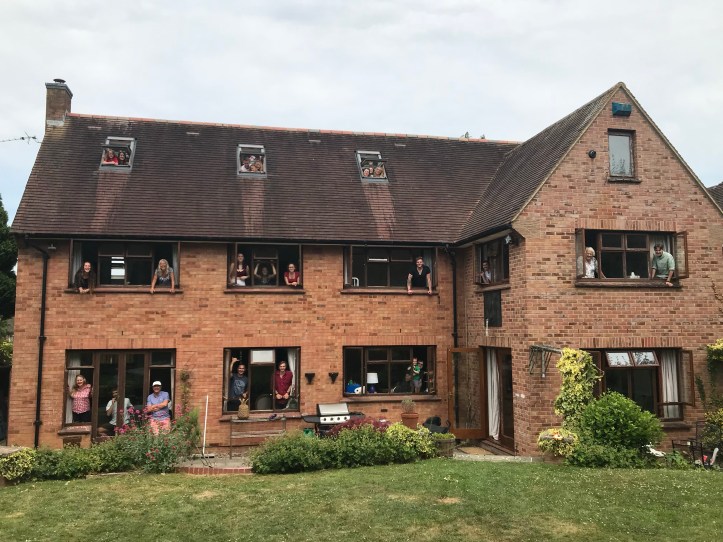

Cheers!
Eric + Leigh
While this list comes from our personal experience, a recent BEMA podcast helped me better articulate some of these.
**I am extremely satisfied to be among the youngest of Generation X, the absolute greatest generation America has ever seen. Take time to honor Gen X for giving America (and the free world) the best music, movies, television, technology, and a very, very diverse catalogue of fashion. We’ve had it all!
 The Prime Pursuit
Thanks for the tips and the reminders of how to/not to approach these young adults. I especially needed to hear #5-7. I agree that you and E definitely work well in this space and with these hearts. ♥️
LikeLike
We want to honor each one of these!!! I’ll be calling on you. As Boomers, we will need a mentor to “get it right”
LikeLike